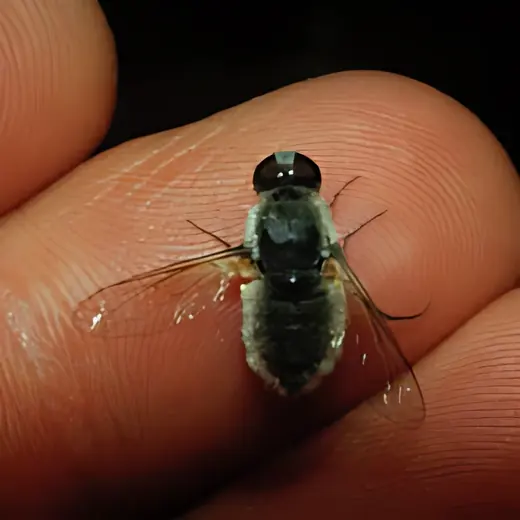
Moscas y tábanosFlies
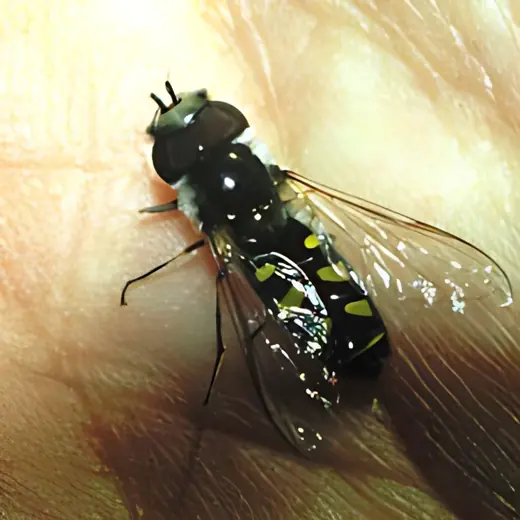
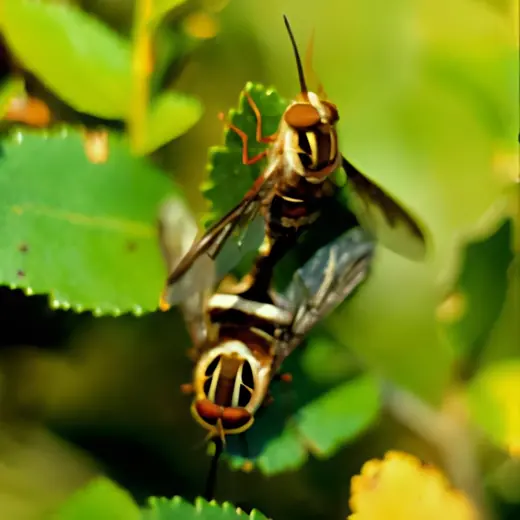
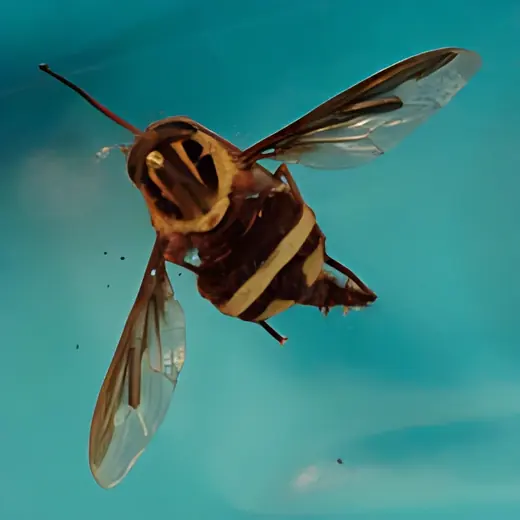
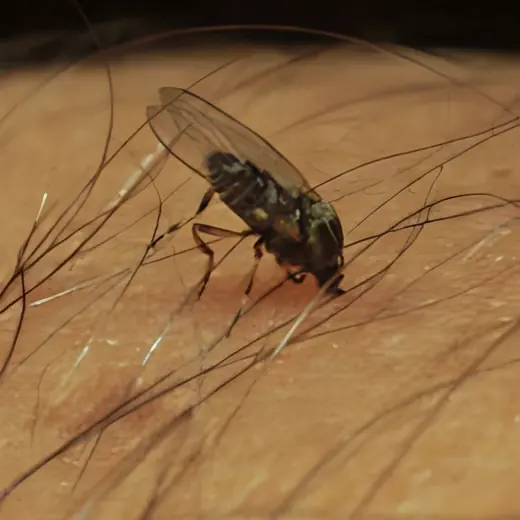
Erystalis tenax
Syrphidae
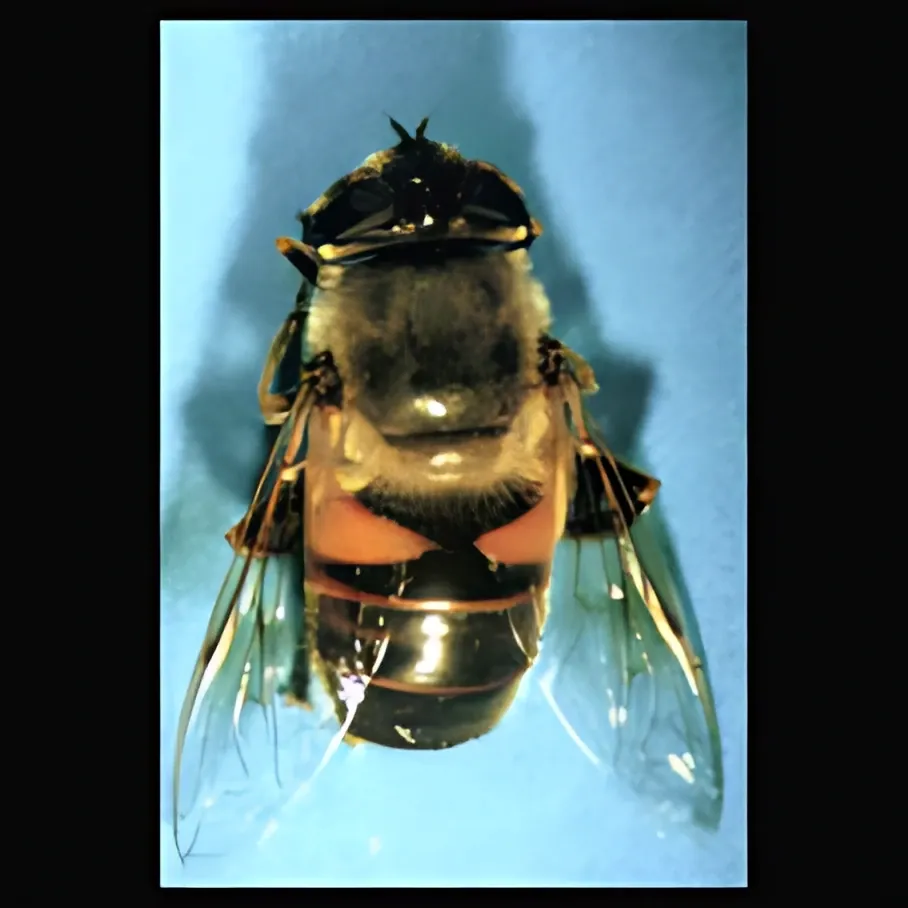
Superficialmente muy parecido a una abeja, pero no tiene cintura, las lineas negras del abdomen son incompletas, la cabeza es muy distinta, el vuelo es mucho más rápido. Huevos son depositados en aguas estancadas podridas. Las larvas acuáticas tienen un tubo largo desde la punta del abdomen que les sirve para respirar. Las larvas grandes salen del agua y pupan en la tierra. Ocasionalmente las larvas se desarrollan en animales mojados en proceso de putrefacción y letrinas abiertas al aire y son responsables algunos casos de miasis intestinal en personas. Luego de unos diez días como pupa salen los adultos. Estos pululan en las flores de los jardines. Son tan parecidos a las abejas que la gente los evita. Los niños los llaman zánganos en la creencia que pertenecen a la especie de Abeja melífera. Se distribuye en todas las Américas.
Superficially very similar to a bee, but it has no waist, the black lines on the abdomen are incomplete, the head is very different, and the flight is much faster. Eggs are laid in stagnant, rotting water. The aquatic larvae have a long tube at the tip of the abdomen that they use to breathe. The large larvae leave the water and pupate in the soil. Occasionally the larvae develop in wet animals in the process of putrefaction and in open-air latrines, and are responsible for some cases of intestinal myiasis in people. After about ten days as a pupa, the adults emerge. These swarm on garden flowers. They look so much like bees that people avoid them. Children call them "zánganos" (drones), believing they are honey bees. It is distributed throughout the Americas.
- OrdenOrder
- Diptera · Moscas y tábanosFlies
- FamiliaFamily
- Syrphidae
HábitatHabitat